The Back Matter Test: Working Out What Earns a Place in Your Dissertation Appendix

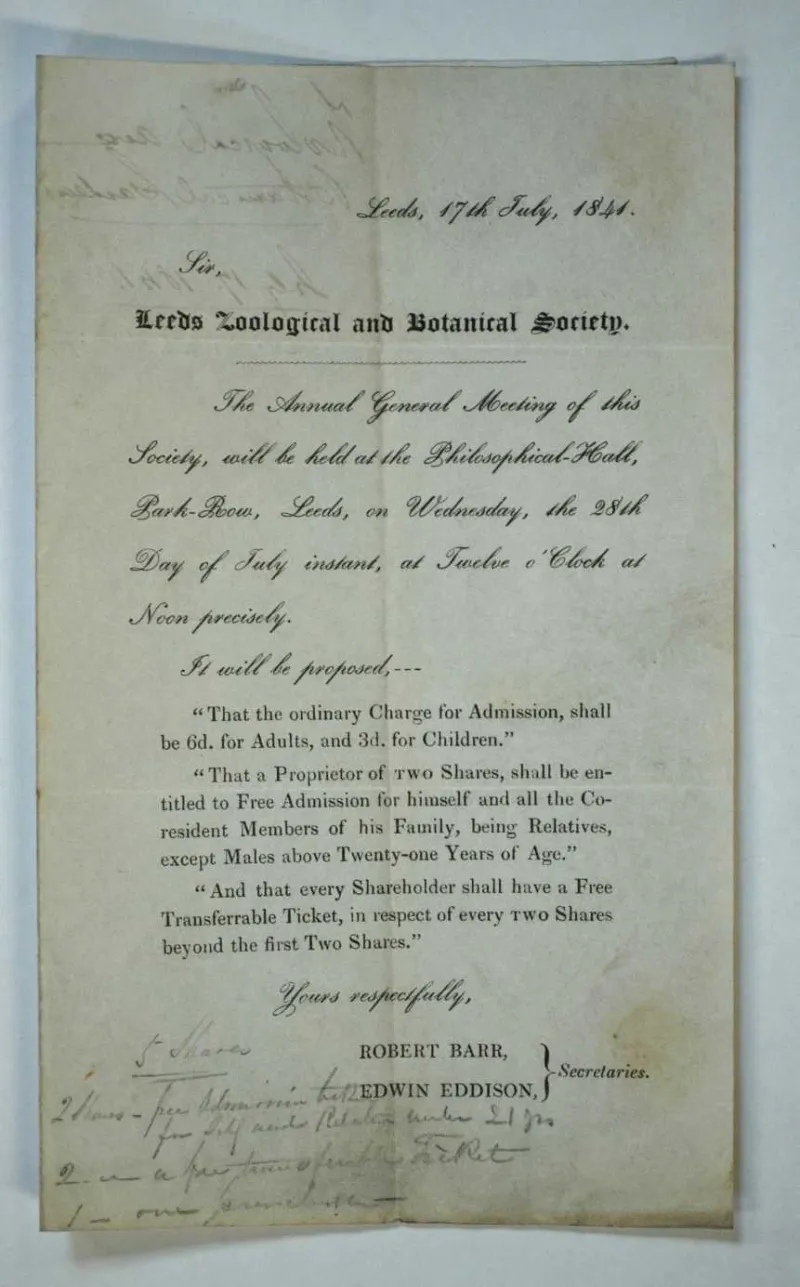
Photo: Jim Osley , CC BY-SA 2.0, via Wikimedia Commons
Most dissertations are judged on what appears in the main text. Yet the appendix is where many students make their least examined decisions — adding documents late, out of anxiety rather than purpose, on the assumption that more evidence can only help. It rarely does. A bloated appendix spreads your marker's attention thin, obscures the material that genuinely supports your argument, and in the case of participant data can create avoidable ethical exposure.
This piece sets out a straightforward audit you can run before submission. It is written for UK dissertation conventions, but every programme differs, so your first port of call remains your module handbook and your supervisor's guidance.
Start from the presumption that less is more
The appendix is supporting matter, not a second volume. Its proper function is to hold material that a reader needs in order to trust or replicate your work, but which would interrupt the flow of the main argument if placed inline. That is a narrow category, and it should stay narrow.
The most useful mental shift is to stop asking could this go in the appendix? and start asking what would a reader lose if it were absent? If the honest answer is 'very little', it belongs in a filing folder on your desktop, not at the back of your dissertation.
What UK examiners generally expect to find there
While requirements vary between institutions, the following items commonly appear in appendices and are usually accepted as legitimate:
- Instruments you designed, such as interview schedules, questionnaire wording, observation grids or coding frameworks, where these are not reproduced in the main text.
- Participant-facing documents, including information sheets, consent forms and debrief materials.
- Sample extracts of data, where a short illustrative excerpt supports claims made in the analysis chapter.
- Letters of approval or access, such as ethics committee confirmation or gatekeeper permission, where your handbook requests them.
- Technical or supplementary tables that would disrupt the readability of a results chapter but which underpin it.
Conversely, material that is frequently inserted without justification includes full transcripts, complete datasets, raw field notes, copies of published papers, and slide decks from unrelated presentations. None of these is automatically wrong, but each needs a reason that you can articulate in one sentence.
The anonymisation question is not optional
Where participant material appears in an appendix, the same standards of confidentiality that governed your fieldwork continue to apply at submission. UK GDPR and the Data Protection Act 2018 do not stop applying because a document has moved to the back of a bound document — and, importantly, an appendix may be read by examiners, external assessors and, after deposit, potentially a wider audience.
Before anything goes in, check that:
- Names, organisations, locations and any combination of details that could identify a participant have been removed or replaced with consistent pseudonyms.
- Pseudonym keys are stored separately and never included in the submitted document.
- Quotations that could be identifying through context — a distinctive job title in a small department, for example — have been handled with care, or paraphrased with a note explaining why.
- Consent materials you include reflect what participants were actually told, rather than an amended version.
If your ethics approval specified that raw data would not be shared beyond the supervisory team, a full transcript in an appendix may breach that approval. Sample extracts, clearly anonymised and justified, are usually the safer path — and where doubt remains, ask your supervisor before submission rather than after.
Permissions and third-party material
Reusing a questionnaire that someone else designed, reproducing a figure from a published article, or including a document produced by an outside organisation raises copyright and attribution issues that sit outside most students' usual reading. Where you include third-party material, record the source clearly, note any permission obtained, and keep the reproduction to what is necessary. Material you cannot attribute confidently is material you should query.
Recognising an appendix dump
An appendix dump usually announces itself in a few familiar ways:
- The appendix is longer than the chapter it supports.
- Items are numbered in a sequence that stops and restarts as material was added over months.
- Several items are never mentioned anywhere in the main text.
- You cannot explain, in one sentence, why each item is there.
- The file size has become a practical problem for submission portals.
Any of these is a signal to audit rather than to add.
A five-question test to apply to every item
Run each candidate item through these questions and be strict with yourself:
1. Does the main text refer to it? If nothing in your chapters points the reader to the appendix, the item is either unnecessary or the signposting is missing. Fix one or the other.
2. Would a reader be unable to evaluate my claims without it? This is the strongest justification available. Use it as your primary filter.
3. Does it duplicate something already in the main text? Repetition wastes space and suggests uncertainty about your own argument.
4. Is it ethically and legally clear to include? Anonymisation, consent and permissions all checked.
5. Is its format appropriate? Extracts, not wholes. A three-page interview excerpt with a note on selection criteria is more persuasive than forty unedited pages.
If an item fails questions one and two, it should be cut or moved into the main text. If it fails question four, it must not be included until the issue is resolved.
Present it as a curated set, not an accumulation
A well-built appendix reads as though someone chose it. Label each item clearly and consistently (Appendix A, Appendix B, and so on), give each a short descriptive title, note the source and date of collection, and refer to it by label wherever it is mentioned in the main text. Where an item is an extract, say so and explain the basis on which it was selected — markers respond well to that kind of transparency.
A brief contents list at the start of the appendix takes ten minutes to produce and makes the whole section legible at a glance.
Make the audit part of your final fortnight
Rather than treating the appendix as a place to deposit anything that will not fit elsewhere, schedule an hour to review it as a piece of writing in its own right. Read it against your main text, confirm every item is referenced, check your anonymisation, and remove anything you cannot justify in a sentence.
A lean, purposeful appendix signals that you understand the difference between evidence and accumulation — a study-skills habit worth carrying well beyond your dissertation.